
FM Weekly Roundup: Creative Processing
ICFF, ICP Portfolio Reviews, AI eliminating the Creative Process; Adobe x Claude

This is FM’s weekly roundup. Fresh Mercado is here to deliver the goods on the future of visual culture. Think of it like a bodega, where we are unloading boxes, and what you see is what you get.
Huge thanks to everyone for showing up for FM’s 3rd Opening Weekend at Photoville! Sad to have missed it? You’re in luck, as we’ll be open through May 30th! So if you need any plans for this Memorial Day weekend, stop by on Saturday, May 23rd, where we will be doing our BYOT - bring your own things/totes/things to hotpress!
This week, I’ve been thinking more about design. I’ve been focusing on modularity and especially work/mobile design- which I will save for Friday, AI (Always I-’m sorry we talk about it so much, but damn), a debate on whether we need the creative process, and down to the minute (which is why this is a PM newsy today), the images coming from ICP 1-year certificate program grads.
ICFF 2026: Common Ground
ICFF 2026 is running til today, May 19th, at the Javits Center for NYCxDesign. The theme for this year focuses on Common Ground: A Global Dialogue on Design and Shared Values. The last time I was there was in 2019, the sign of the times through modularity, futurity, earth-based materials, and a color register tuned to calmness. Metals next to earth tones. Blues, oranges, and a range of greens.
FM has been tracking this since February with Rima Sabina Aouf’s Dezeen piece on calm technology. The throughline continues to show through with calmness as a structural decision and focusing more on the form with function.
My favorites:
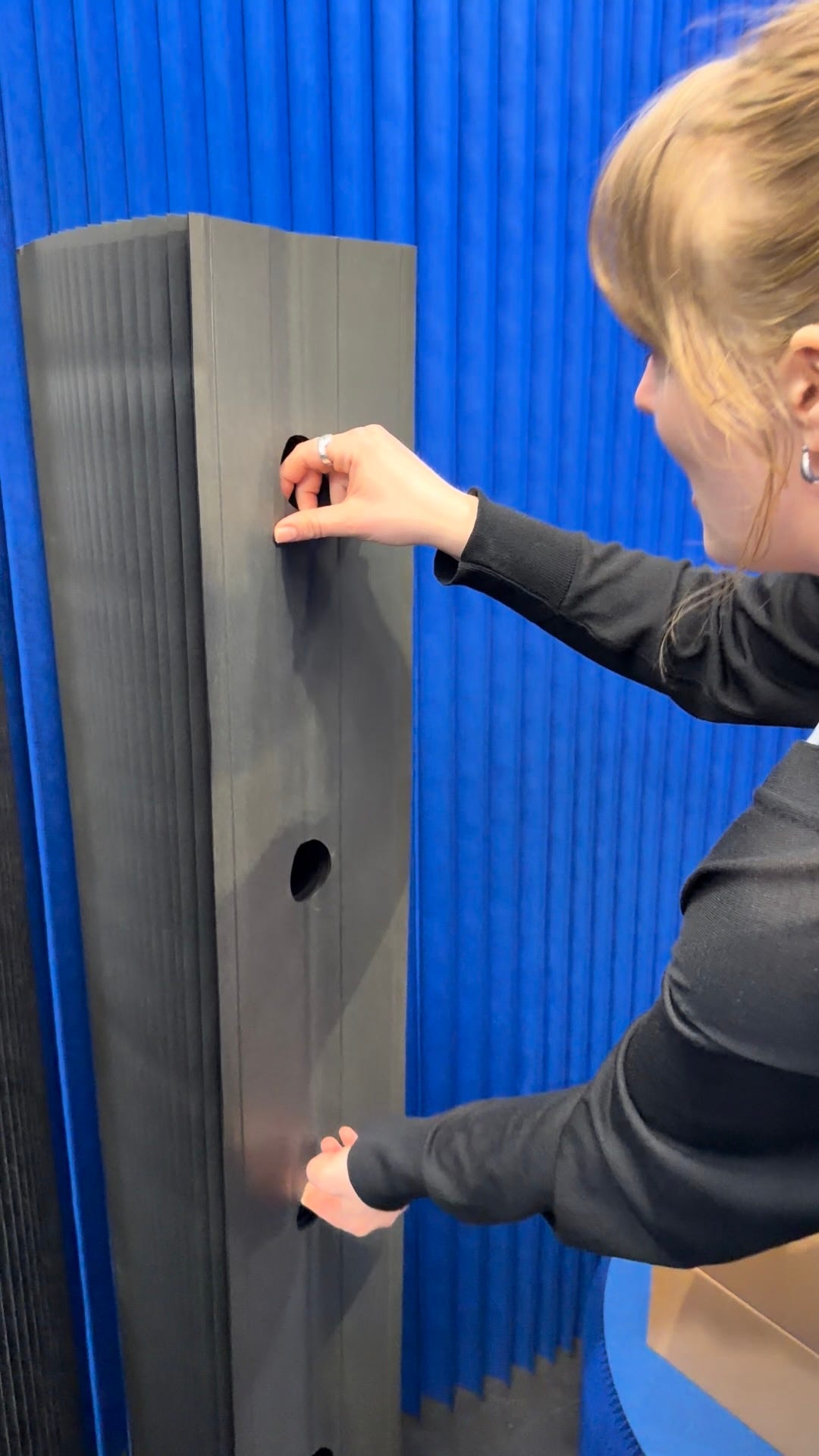
Molo Design is a partition company that uses paper- and fiber-based materials to make modular, expandable space dividers. What landed was the accessibility. These compounds open and close with the room. Their range extends to tables, desks, and chairs, all working with the same spatial logic that gives way when you need it to.
Studio Christine Kalia, founded by Cypriot architect-designer Christine Petrou, makes furniture from deadstock fashion materials. One chair was made for Chloé, and I couldn’t get enough of it or their chrome sectional, which made me a bit nervous while I was wearing a skirt lol. Fluid shapes, unexpected material combinations, sculptural before sustainable. The deadstock is the medium, not the marketing.
The international design school showcases are always my favorite at ICFF. This year’s workshop theme was The Unseen Narratives.
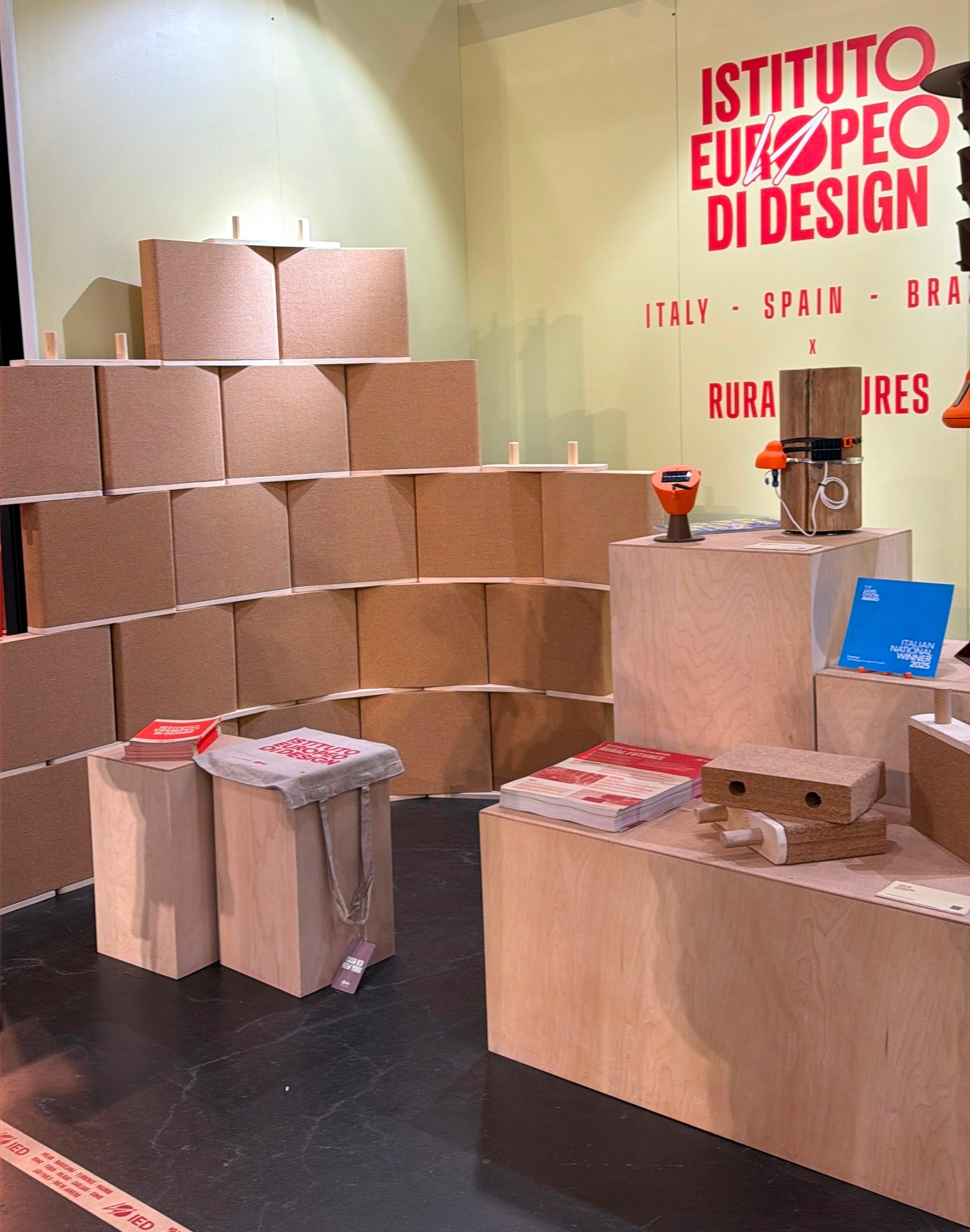
Istituto Europeo di Design (IED) presented CALIU (“warmth” in Catalan), a modular interior cladding system in natural cork held together by solid-wood joints. Build it up as soundproofing, use it as a divider for taking calls, or use it selectively to cover walls. It’s adaptable and provides comfort, making it easy to build up and take apart.
Tecnológico de Monterrey, Escuela de Arquitectura, Arte y Diseño brought Unseen Forms: Imaginers for Non-Default Features, centered on hidden disabilities and what design looks like when it stops assuming a default user. They took the theme literally and made it methodology.
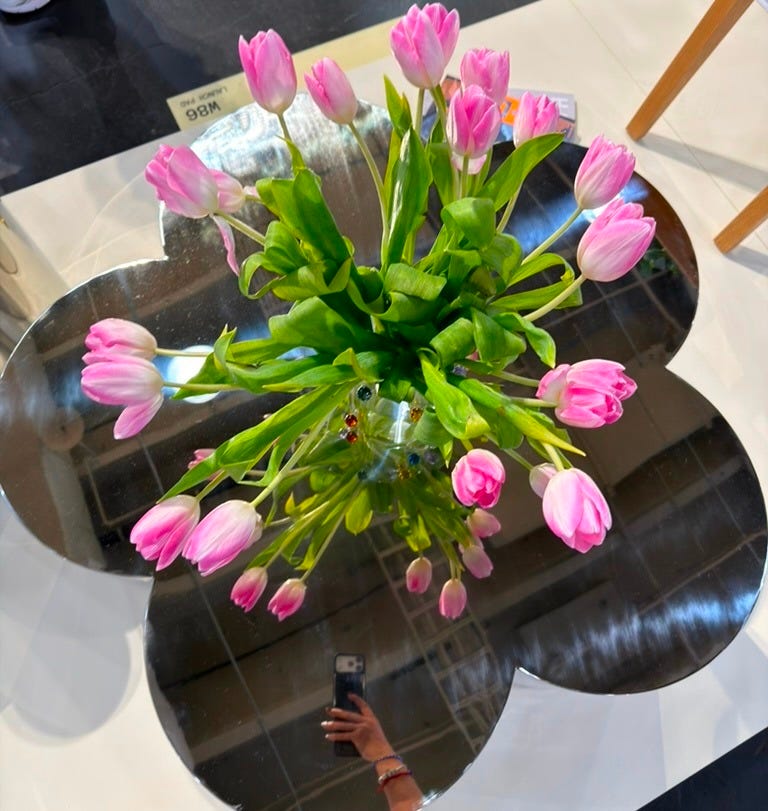
K’tana made a chrome flower table that felt very on-brand for me.
Modern Shelving showed aluminum modular shelving. Lightweight, no drilling, reconfigurable. Shelving you can move with you, in a city where you move often, is a quietly radical thing.
3D printing as building your own materials
The 3D printing presence was also the biggest standout, with studios making their own materials and considering waste, sourcing, and what the object becomes when you’re done with it.
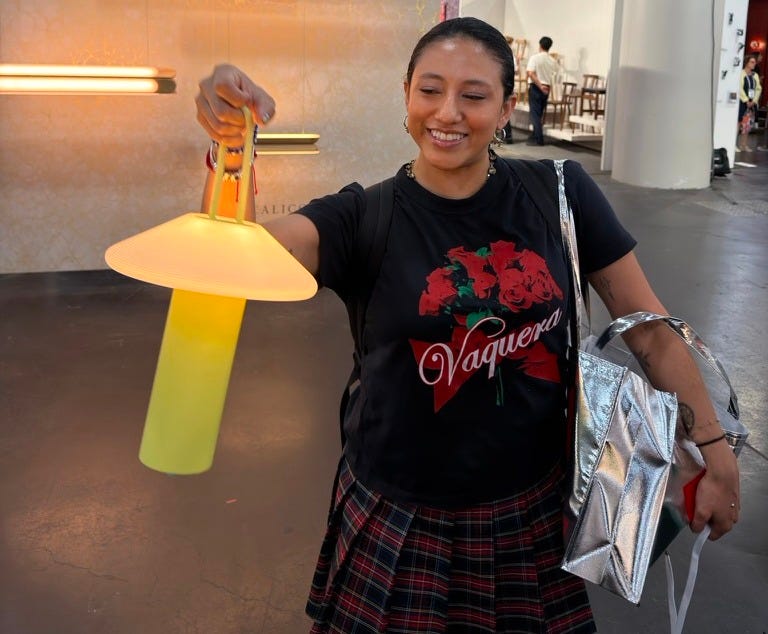
Gantri, San Francisco, was founded by Ian Yang in 2016. They make their own plant-based polymer with materials scientists at colorFabb, derived from non-GMO sugarcane and engineered for lighting. Made to order in California and biodegradable. They also came in beautiful colorways and were portable.
Misewell, out of Milwaukee, makes ceramic lighting fully in-house, with 3D printing for prototyping. The Q Sconce embodies the warmth of fired clay and enduring modernity.
Claude the new OS?: Adobe for Creativity
Claude begins to look like an emerging new operating system. On April 27, Adobe opened a beta of Firefly AI Assistant, that can work as an agentic work flow multi-step workflows across Photoshop, Premiere, Lightroom, Illustrator, and Express. You describe the outcome and the AI produces the tools sequentially to get your output. David Wadhwani, who runs Adobe’s Creativity & Productivity Business, states: “You direct how your work takes shape, and your perspective, voice, and taste become the most powerful creative instruments of all.”
This past week, Adobe for Creativity is now live inside Claude. This means you can be in a conversation with Claude and prompt to edit a video, build a template, run a Firefly action. Rather than opening Photoshop, it now allows you to come to wherever you’re working.
I’ll definitely need to take some time to play with this, i would be curious on the output. But more importantly, as mentioned earlier, what does that mean for all the imagery and edits if copyright law states that AI-generated works cannot be copyrighted? It raises the question, as the lines are blurred, whether Adobe will soon lobby for the passage to be quietly redacted.
Alternatively, Director Koji Fukada presented Nagi Notes at the Cannes Film Festival this past week, which is a film about an architect who travels to rural Japan to pose for a sculpture. At the film’s press conference, Fukada talked about the importance of process, especially in the time of AI, saying that using AI lets you “skip over the process and jump straight to the result,” risking the very thing art is for: self-expression and understanding the world.
This encapsulates our month of May, in thinking about the process, “getting it wrong”, and the sense of how living in a world where everything feels too perfect starts to gravitate towards liminal rather than beautiful art. Adobe is doing this with its AI; it contradicts itself on the one hand by saying that the state is what’s left when you remove the process, but the reality, as Fukada states, is what the process makes. You can’t know what you do and do not like if you don’t feel the tension between the work. I’m also a believer that unless you are collaborating with alternative perspectives, the homogeneity over time (what’s already happening in art, less than 6 months into 2026) will only leave us with smooth-brain art. The process is what’s time-consuming, and Adobe is optimizing for production, while Fukada reminds us that presence and allowing art to take its time become part of taste development.
ICP Portfolio Reviews
I’m running a bit late on our newsletter this week, as I just wrapped up the ICP portfolio reviews in person today. I am grateful to meet the photographers and am dropping some summaries while they are fresh. Follow them and support them!
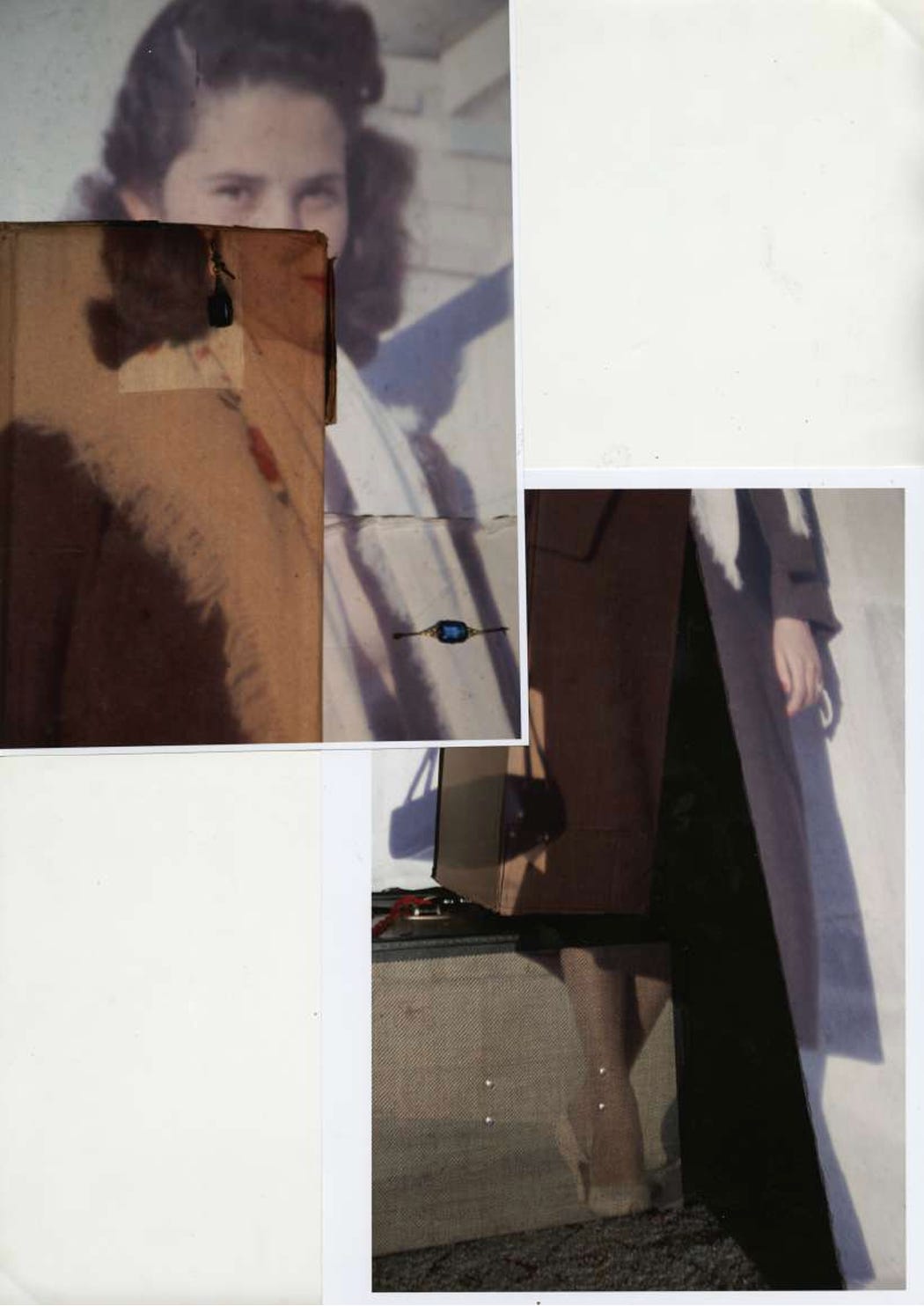
Yuri Avila is a New York-based documentary and editorial photographer with almost 10 years of experience across different fields of journalism. Her work focused on telling the narrative about her grandmother’s archive. Mixing projection, embroidery, and the archive with self-portraiture, the images reflect a beautiful, woven history of the absence of a loved one and how found footage can be interwoven as an object to show longing and the absence of a person while also understanding one's own life without them.
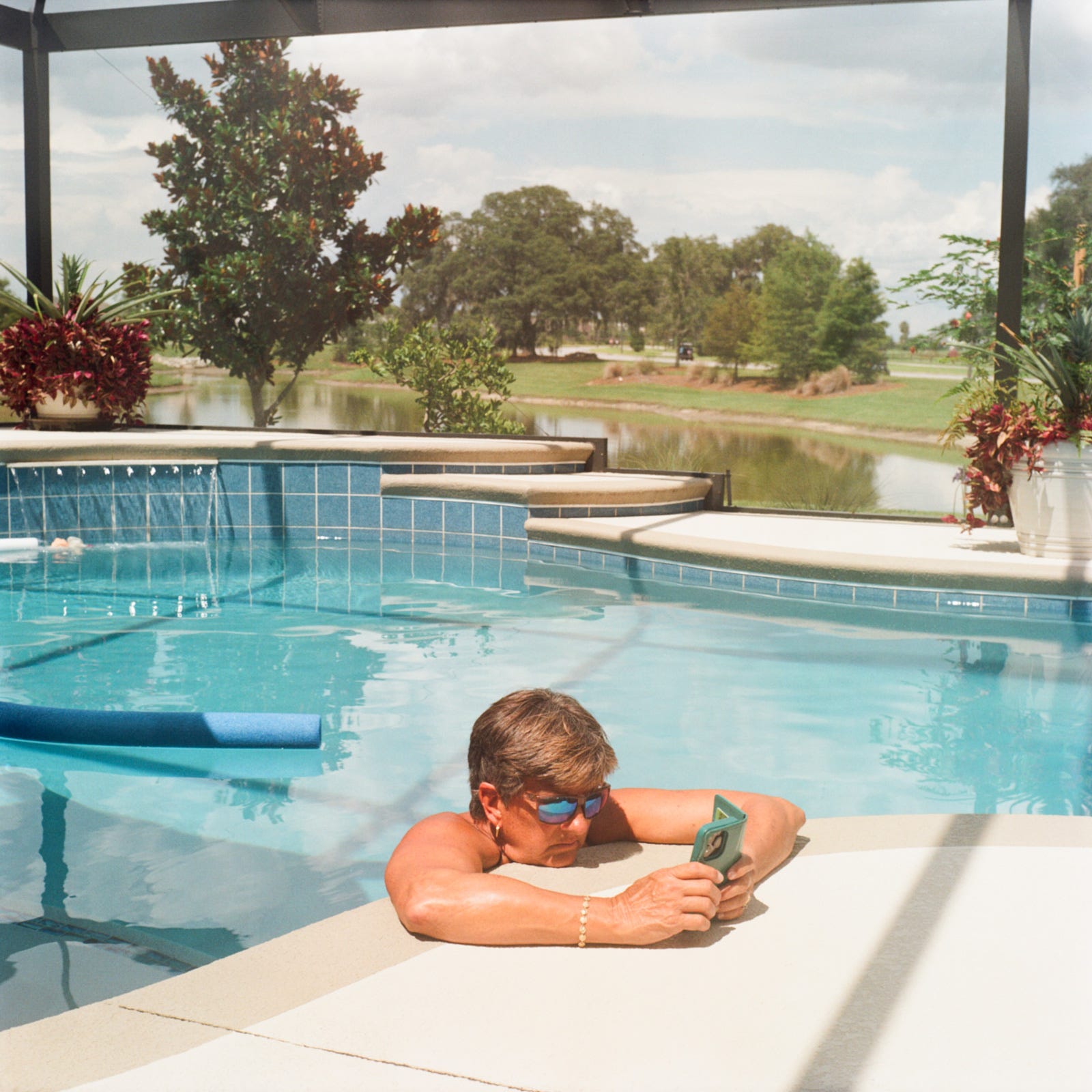
Stephen Cummings is a documentary photographer and curator whose series focused on capturing the homogeneity of The Villages, Florida. His images show the whimsy, the bizarro of a town that is mostly retirees, or as he put it, “felt like a frat party” as everyone is always coming together for mixers. Additionally, Stephen is a curator who has been hosting a curation gallery/pop-up in his home in Bushwick for the last few years, featuring a variety of visual practitioners.
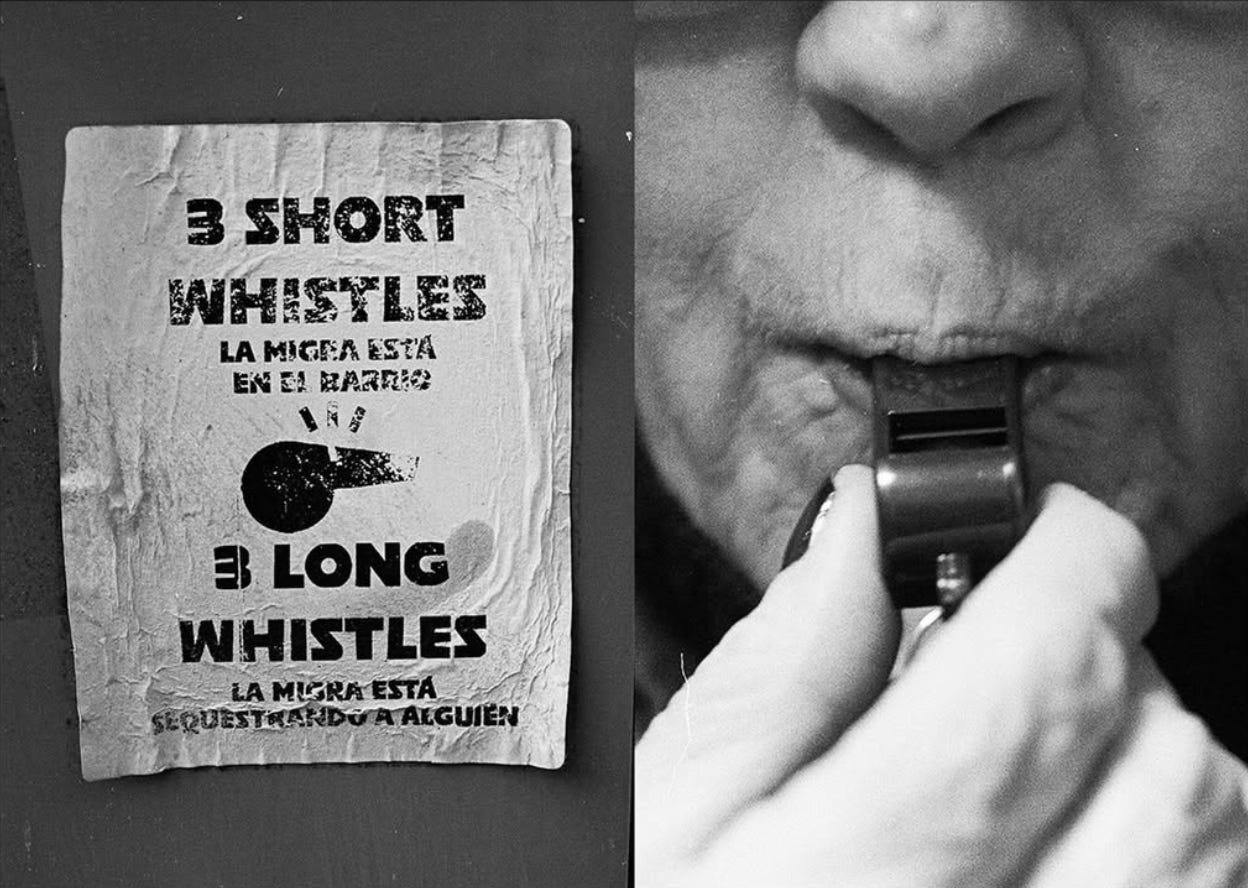
Maria Fernanda Muñoz Ruiz is a Mexican photojournalist who has been documenting ICE raids in Bushwick, telling anonymous stories of those who have been kidnapped, the protests, and actively finding ways to support through immigration mutual aid. Her work is an interactive series online with a map showing stories hyperlocated where the raids occurred.
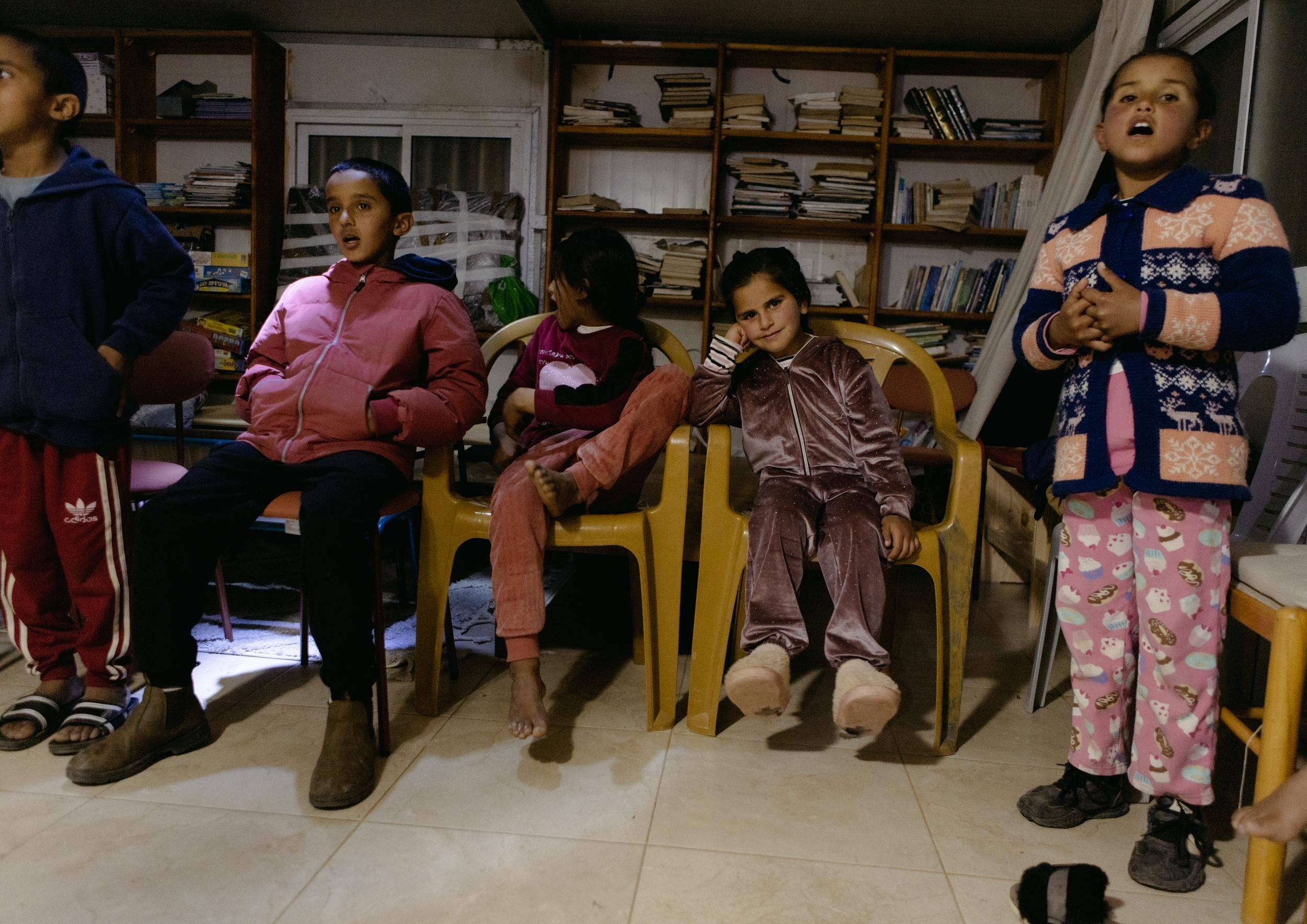
Dana Golan is an editorial photographer and photojournalist who has been creating photo essays between here and Israel, including the project Sotna, which documents a music program led by volunteers and activists in Area C of the West Bank that started in February of 2025 to offer joy, connection, and solidarity amidst increasing violence and displacement in the West Bank.
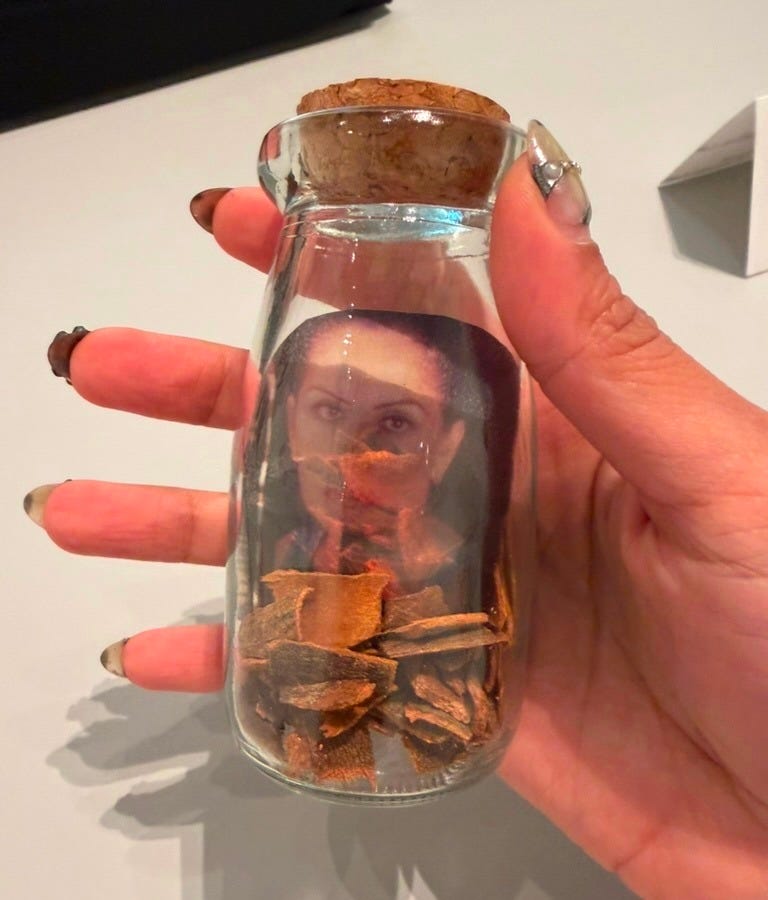
Joana Toro is a Colombian photojournalist from Bogota whose recent series, Elisa, focuses on memory, scent, and the senses. Following the tragic murder of her mother due to femicide, Toro asks how we reconnect the lens to memory through scent. The exhibition features glass bottles filled with imagery, surrounded by spices and scents often found in the kitchen. Each image holds a frame of memory, be it through her mother’s personal archive or the forensic and public documentation of her mother’s killing. However, rather than focusing on the tragedy, it's building a connection with memories to heal through the process of installation, interaction, and universal scents from “home”.
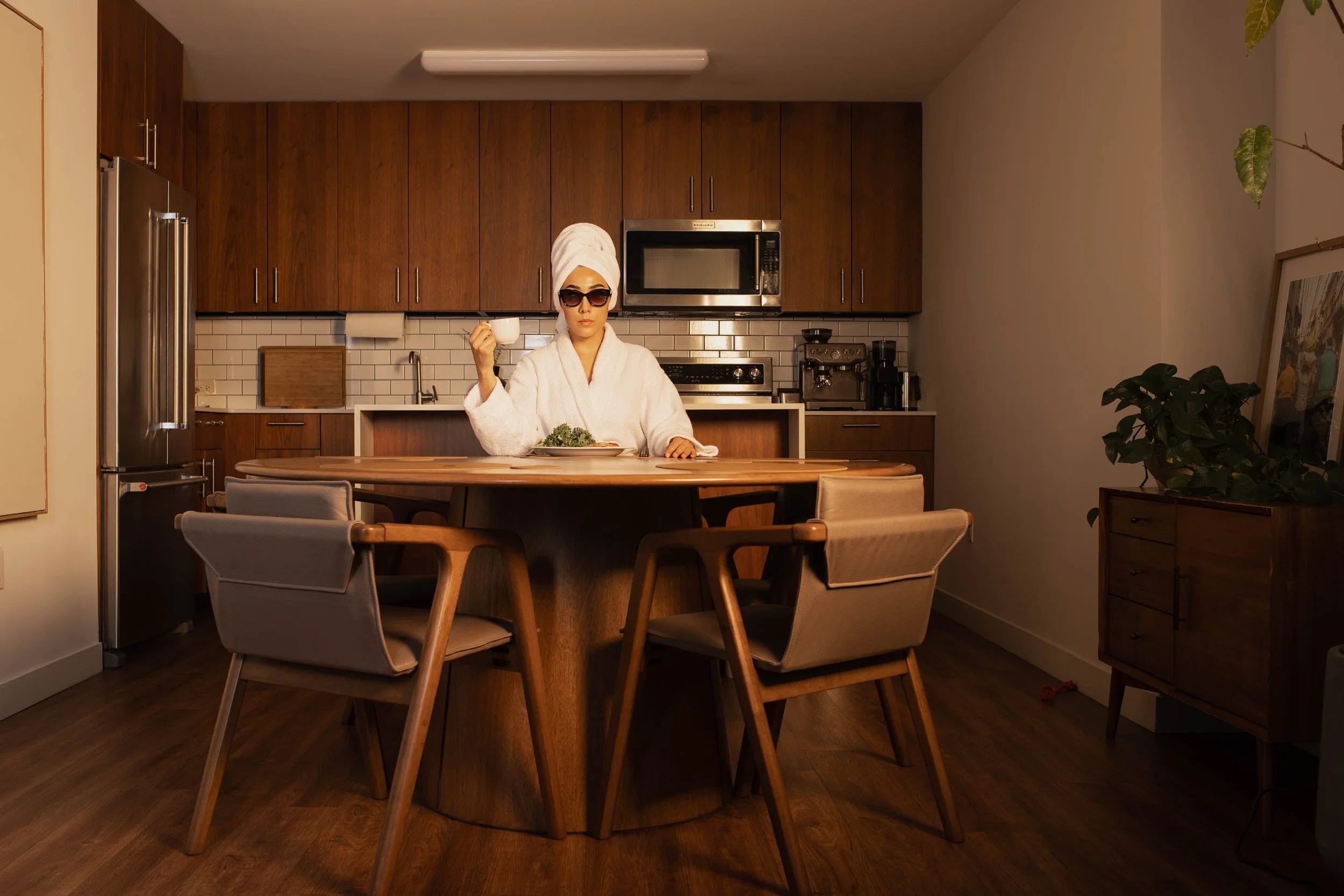
Yanara Suenaga is a Mexican photographer who documents her daily life as a person with Level 1 Autism. Feeling as though the representation of Autism is actively lent to Level 3 representation, Yanara attempts to break stereotypes by documenting her own journey of sensory regulation in her home and her day-to-day activities. It gives the viewer an entry to break the stigma that contradicts what is often seen as “autism” representation in the media.
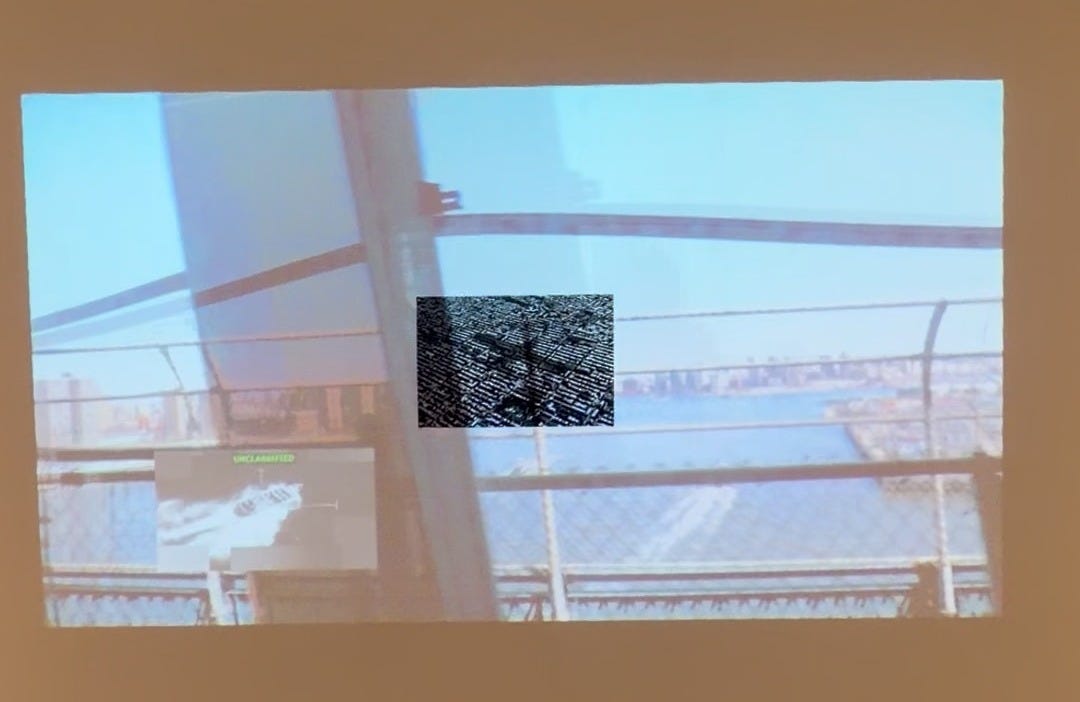
Gabriela Ordoñez is a Colombian photographer whose project focuses on the political propaganda that has been used by the US in order to promote and fearmonger about drugs. With the current political climate between the US and North American, Caribbean, and South American countries, she paints the juxtaposition of her experience with how deeply tied the drug war in these countries often goes beyond the media.
— Nicole 👓
Go to this:
· Through May 25 - Evidence of Existence: 2026 ICP Recent Graduates Exhibition at the International Center of Photography (May 16–25). Work from ICP’s One-Year Certificate Programs in Creative Practices and Documentary Practice and Visual Journalism, plus Teen Academy Imagemakers. Curated by Sara Ickow. This is where the photographers I just reviewed are showing.
· Through May 30 - Cafecito: What Keeps Us at Photoville, Brooklyn Bridge Park. Saturday, May 23, come through for BYOT - bring your own totes/things to hotpress.
· Through June 6 - Mao Ishikawa: ROGUE at Alison Bradley Projects. Okinawan photographer’s first U.S. solo, also in the Whitney Biennial.
· Through August 17 - Greater New York 2026 at MoMA PS1. The sixth edition of their signature survey, coinciding with PS1’s 50th anniversary. 53 artists, 150+ works across the full building, themes around surveillance, economic precarity, and shifting technologies.
· Through August 23 - Whitney Biennial 2026.
· May 22 through October 25 - Hujar:Contact at the Morgan Library. Over 110 contact sheets and 20 enlargements drawn from the Morgan’s collection of more than 5,700 Peter Hujar contact sheets. The work before the work.
· May 23 - Trevor Paglen: How to See Like a Machine: Images After AI book launch at EARTH, 49 Orchard St, with Zoë Hitzig and Josh Kline. Published by Verso. If you sat with the Adobe & Fukada section, this is where to keep thinking.
Go To This:
-May 22 to October 25 - Hujar:Contact at the Morgan Library. 110+ contact sheets from the Morgan’s Peter Hujar Collection.
-May 23 - Trevor Paglen book launch at EARTH, 49 Orchard St, with Zoë Hitzig and Josh Kline. How to See Like a Machine: Images After AI, published by Verso.
-Through May 25 - Evidence of Existence: 2026 ICP Recent Graduates Exhibition at ICP, featuring the One-Year Certificate and Teen Academy Imagemakers graduates. Where the photographers I just reviewed are showing.
-Through May 30 - Cafecito: What Keeps Us at Photoville, Brooklyn Bridge Park. May 23, BYOT for hot pressing.
-Through June 6 - Mao Ishikawa: ROGUE at Alison Bradley Projects. Okinawan photographer’s first U.S. solo.
-Through August 17 - Greater New York 2026 at MoMA PS1. The sixth edition of their signature survey, marking PS1’s 50th anniversary.
- Through August 23 - Whitney Biennial 2026.
Apply to this:
Holiday Club is a Substack sharing weekly curated job opportunities across the creative industry.
Rolling - Secret Riso Club is hiring a part-time Communications & Community Coordinator in Bushwick.
-Due May 28 - i-D Creative Writing Competition across fiction, non-fiction, experimental, and drama. $500 per category, published in their Fall 2026 issue.
-Due June 1 - The Paula Riff Award from the Center for Photographic Art for artists challenging conventional photography. $1,000 award.
-Due June 14 - Deloitte Photo Grant 2026 for photographers under 35 on the theme Proximities. €75,000 across two grants.